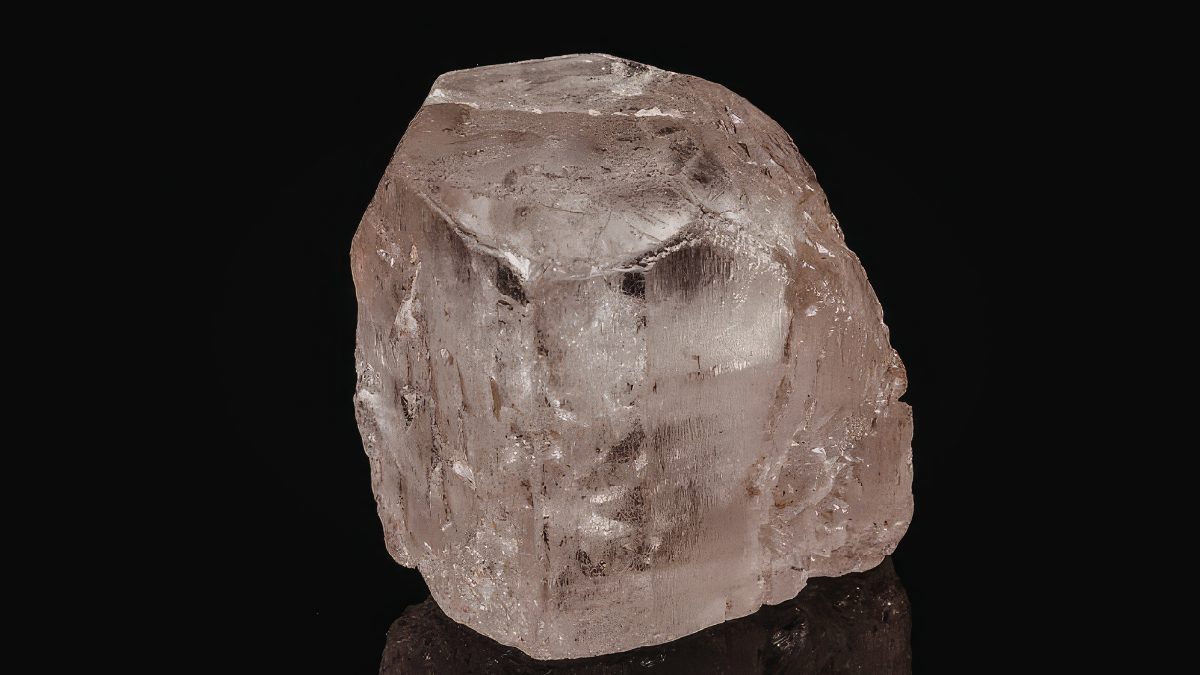
For most of the modern diamond industry's history, the journey from mine to market was invisible to consumers. Diamonds changed many hands — miners, dealers, cutters, polishers, distributors — and by the time a stone reached a retail showcase, its origin was virtually untraceable. But the world has changed. Today's consumers, and the jewellers who serve them, increasingly want to know where their diamonds come from. Provenance is no longer a nice-to-have — it's becoming a competitive differentiator in the luxury market.
What Is Diamond Provenance?
Diamond provenance refers to the documented geographic origin and supply chain journey of a diamond from its source mine to the end buyer. It's more than just knowing which country a diamond came from — it encompasses the entire trail of custody and the ethical standards upheld at each step.
It's important to distinguish between two related but distinct concepts:
- Conflict-free diamonds: Stones that have not financed armed conflict (as defined by the Kimberley Process Certification Scheme). This is a minimum threshold.
- Ethically sourced diamonds: A broader concept that includes conflict-free status plus labour rights, environmental stewardship, community development, and transparency. An ethically sourced diamond checks multiple boxes.
Provenance encompasses both of these concepts — it's the complete story of a diamond's journey and the values upheld along the way.
Major Diamond-Producing Regions and Their Characteristics
Botswana
Botswana is the largest diamond producer by value, producing approximately 20-25 million carats annually. The flagship mine is operated by Debswana, a joint venture between the government and De Beers. What makes Botswana significant is its government partnership model — 50% of the country's mining revenue goes directly to the state, funding education, healthcare, and infrastructure. The diamonds from Botswana are generally known for high quality and gem-grade material. For buyers, "Botswana origin" carries positive associations with good governance and community investment.
Russia (ALROSA)
Russia is the world's largest producer by volume, producing roughly 40-45 million carats annually through ALROSA and other operators. Russian diamonds have historically been a staple of global supply. However, geopolitical considerations have affected the market significantly since 2022, with the G7 (the US, EU, and UK) implementing sanctions on Russian rough diamonds. This has created a supply shock and increased prices for alternative origins. For buyers, Russian diamonds are still available but come with regulatory complexity in some Western markets.
Canada
Canada produces approximately 10-15 million carats annually, known for stringent environmental regulations and modern mining practices. The Diavik and Ekati mines in the Northwest Territories are among the world's most responsibly operated. Canadamark and Maple Leaf diamonds offer full traceability from mine to market. Canadian diamonds command a premium — typically 10-20% above comparable non-certified stones — but the premium reflects verified ethical sourcing and complete supply chain transparency. For luxury retailers, Canadian diamonds are a powerful marketing story.
Australia (Argyle — Now Closed)
The Argyle mine in Western Australia was the world's largest diamond mine by volume for three decades, producing approximately 90 million carats over its lifetime. It was particularly famous for producing pink diamonds, champagne diamonds, and brown diamonds (fancy colours). Argyle was owned by Rio Tinto and operated under high environmental standards. The mine closed in November 2020, creating a significant supply shortage of Argyle-origin coloured diamonds. Today, "Argyle diamond" stones command substantial premiums due to their rarity — a champagne or pink from Argyle now trades at 15-30% above equivalent non-Argyle stones. For retailers, Argyle origin is a major selling point.
Southern Africa (South Africa, Namibia, Lesotho, Tanzania)
Southern Africa has deep historical roots in the modern diamond industry — it's where the diamond rush began in the 1870s. Major mines include De Beers' Venetia mine in South Africa and various operations in Namibia and Tanzania. The region produces excellent quality diamonds, though supply varies significantly based on mining economics. Quality from the region is generally very good, though buyer perception is sometimes affected by the region's complex history. Today, Southern African diamonds are rigorously vetted under the Kimberley Process and modern ethical frameworks.
Why This Matters for Retailers
Your customers are asking questions about diamond origins. A 2024 survey found that 68% of diamond buyers under 40 consider ethical sourcing important in their purchase decision. Being able to tell the story of a diamond's origin — where it came from, how it was mined, who benefited — is a powerful sales tool. It builds lasting customer trust and justifies premium pricing.
The Kimberley Process — What It Does (and Doesn't) Do
The Kimberley Process Certification Scheme (KPCS) was established in 2003 in response to "blood diamond" conflicts in Angola, Sierra Leone, and other regions where diamond revenues funded armed insurgencies. It required all rough diamond shipments to be accompanied by certificates stating that they were not financing conflict.
The KPCS was a crucial first step, and it has legitimately reduced conflict diamonds in the market. However, it has significant limitations that every buyer should understand:
- Rough-only scope: The KPCS applies only to rough diamonds, not polished stones. Once a diamond is polished, it's virtually impossible to track its origin.
- Narrow definition of "conflict": KPCS defines conflict diamonds specifically as those financing armed conflict against UN-recognized governments. Many human rights abuses, environmental destruction, and labour exploitation don't meet this narrow definition.
- Minimal enforcement: Enforcement varies significantly by country. Some KPCS participants have weak audit mechanisms.
- No environmental criteria: The KPCS doesn't address environmental impact or land restoration.
In summary: Kimberley Process compliance is a baseline minimum, not a guarantee of ethical sourcing. Look beyond it.
Beyond Compliance — The New Standards
Leading companies in the diamond industry are pioneering transparency technologies and initiatives that go far beyond Kimberley Process requirements:
- Blockchain traceability: De Beers' Tracr platform and Everledger use blockchain to create immutable records of a diamond's journey. Each custody change is recorded on the blockchain, creating a transparent audit trail.
- GIA Diamond Origin Report: The Gemological Institute of America now offers a "Diamond Origin Report" that uses advanced spectroscopic analysis to identify the geological origin of a diamond (e.g., Botswana, Russia, Canada) with high accuracy.
- Brand initiatives: Tiffany & Co. has committed to mine-to-market transparency for all diamonds over 0.5ct. Cartier has implemented strict sourcing standards. These initiatives drive market expectations upward.
- Third-party certification: Organizations like the Responsible Jewellery Council audit and certify diamond supply chains against rigorous standards.
How A to Z Diamonds Approaches Provenance
We source diamonds from a vetted network of 50+ vendors across India's major diamond hubs — Mumbai, Surat, and other cutting centres. Here's how we ensure responsible sourcing:
- We prioritize suppliers who can document the origin of their rough materials and provide Kimberley Process certificates
- We work with suppliers who are RJC (Responsible Jewellery Council) certified or are working towards certification
- We avoid sourcing from suppliers with a history of labour or environmental violations
- For high-value stones (above 5ct), we request detailed documentation and origin analysis when available
- We are transparent with our clients about what we know and don't know about each diamond's journey
While perfect mine-to-finger traceability remains a challenge for the wider industry (the polished diamond market is still fragmented), we are committed to transparency at every step we control.
What You Should Ask Your Diamond Supplier
When sourcing diamonds, ask these questions:
- Does this stone have Kimberley Process certification?
- Can you document the rough material's origin country?
- Does your supplier have RJC certification or equivalent?
- Are there any origin analysis reports available (GIA, Sarine, etc.)?
- What is the supply chain from mine to your hands?
- Can you provide references from previous buyers?
The Bottom Line
Provenance matters — to consumers, to retailers, and to the long-term health of the diamond industry. While perfect traceability is not yet a universal standard, asking questions and working with suppliers who prioritize transparency builds confidence and differentiation in the market. As a wholesale buyer, your sourcing choices influence not just your bottom line but also the industry's future.